Environment
Environmental Management: Actions
Environmental Education
We provide training opportunities to raise employees’ awareness about environmental conservation, learn the knowledge necessary for accomplishing our environmental goals, and gain the expertise to deal with emergencies. These opportunities include briefing sessions about environmental law, which are provided by the ISO Promotion Office, workshops for training the auditing team, and an assortment of programs provided by each corporate division. In 2025, we held an internal event called Sustainable Academia, as we did in 2024. The event included a program called Sutenai Marché. In this program, employees bring in items that they no longer need and write messages on cards communicating their feelings about the items in question. These messages are then read by the people the items are handed on to. This experience gives employees a stronger idea about sustainability.

Sutenai Marché
(Shinagawa Office)
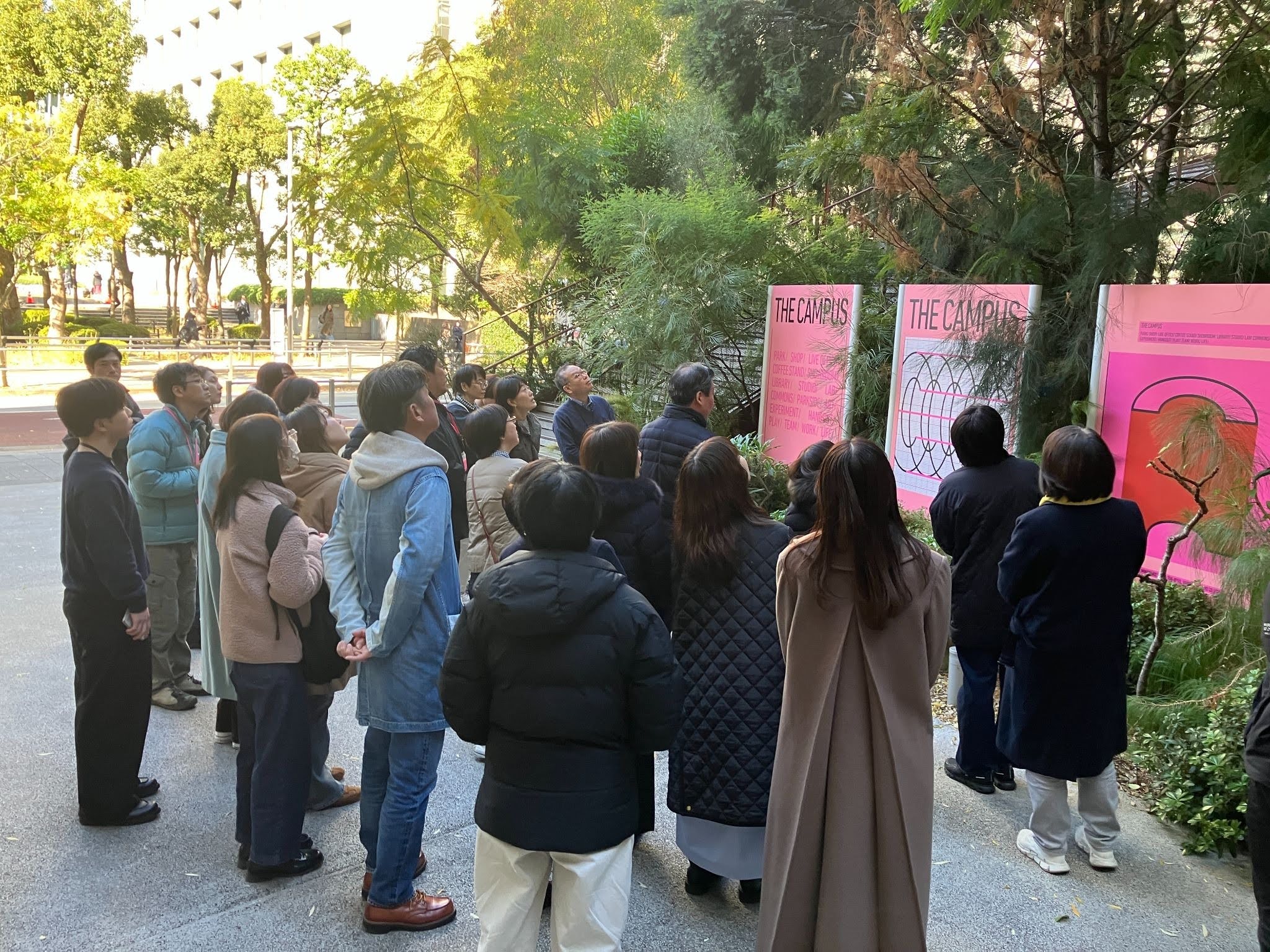
The Campus Green Adventure!
(Shinagawa Office)
-
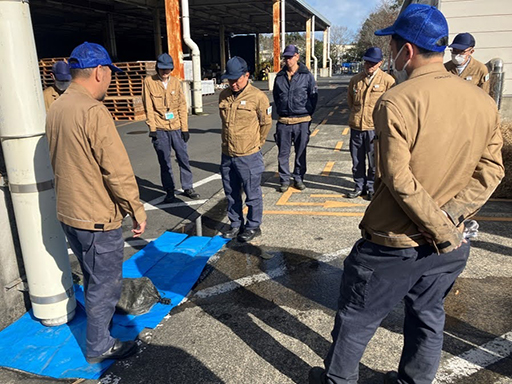
*Simulated emergency: An oil discharge from a hazardous goods warehouse
Internal (First- and Second-Party) Auditing and Third-Party Auditing
Internal audits (first- and second-party audits) are performed to ensure conformity across our corporate group, with a focus on legal compliance. In first-party audits, the auditee (a group company) performs the audit on itself. In second-party audits, our ISO Promotion Office performs the audit on the auditee.
In 2025, first-party audits were performed between June 6 and August 25, second-party audits were performed between July 28 and September 5, and third-party (ISO 14001) audits were performed between December 1 and 4.
Besides these audits, the ISO Promotion Office performed snap second-party audits of four sales companies between May 19 and 23, as the 2024 third-party audit had identified in these sales companies minor nonconformities that required corrective action. The snap audits found no nonconformities, denoting that the nonconformities had been remedied.
The first- and second-party audits identified 20 instances requiring corrective action, one of which was a major nonconformity.
The nonconformity concerned a distribution subsidiary. The auditors were unable to find any contracts stipulating the subsidiary’s trading relationships with a contractor that removes, and another contractor that disposes of, waste generated by one of the subsidiary’s business locations. The auditors noted that this could constitute a violation of the Act on Waste Management and Public Cleaning.
However, it was later revealed that such contracts were in fact present, unbeknownst to the auditors at the time of the auditing.
The logistics subsidiary has a practice whereby contracts with waste service providers are retained in electronic format on a central database managed by the head office. However, at the time of the auditing, some contracts were yet to be inputted onto the database, which explains why they were missed by the auditors.
Of the 20 nonconformities, 15 were identified in the first-party audit, suggesting that the audit team has improved somewhat in its discernment. Waste disposal is a recurring theme among the nonconformities, so we will further improve training on proper waste management.
The third-party (ISO 14001) audits highlighted 18 good aspects. It is also true, however, that a minor nonconformity was highlighted.
Facilities for storing industrial waste are legally required to display a signboard detailing the categories of waste stored at the site. A business location in Tokyo was storing used battery cells in plastic containers without including this information on the signboard there.
A plan for corrective action was submitted to the auditor.
The corrective action has been taken. The business location now has a designated place for storing used batteries and the facility signboard at the storage facility has been amended.
To make sure there is no such nonconformity in other business locations, all business locations are checking whether the information on their signboards matches the waste, battery cells or otherwise, being stored.
We will provide environmental training focused on waste disposal methods, and the ISO Promotion Office will conduct on-site inspections.
The third-party audit in 2025 was a surveillance audit.
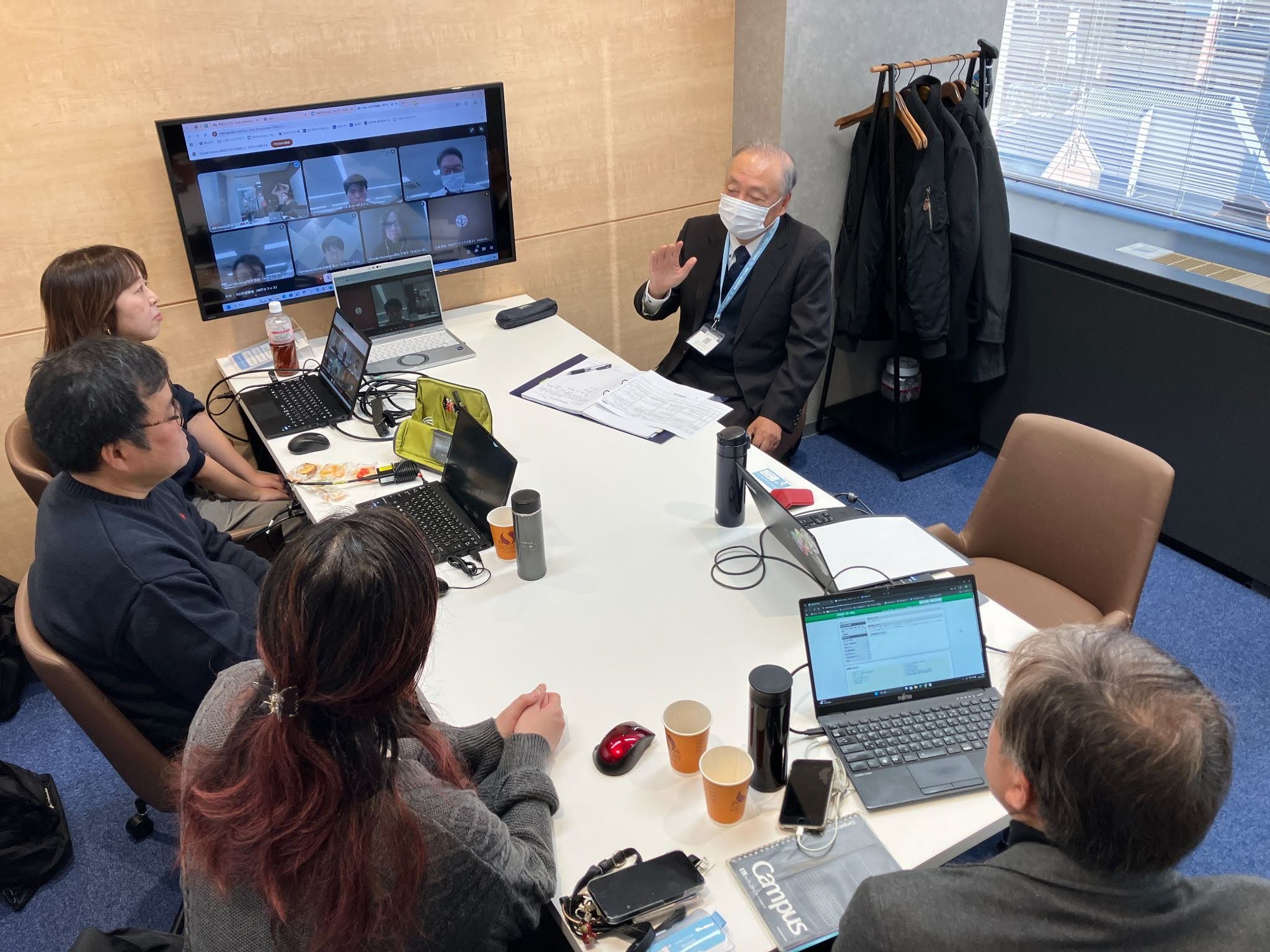
(KOKUYO Marketing’s Kobe office)
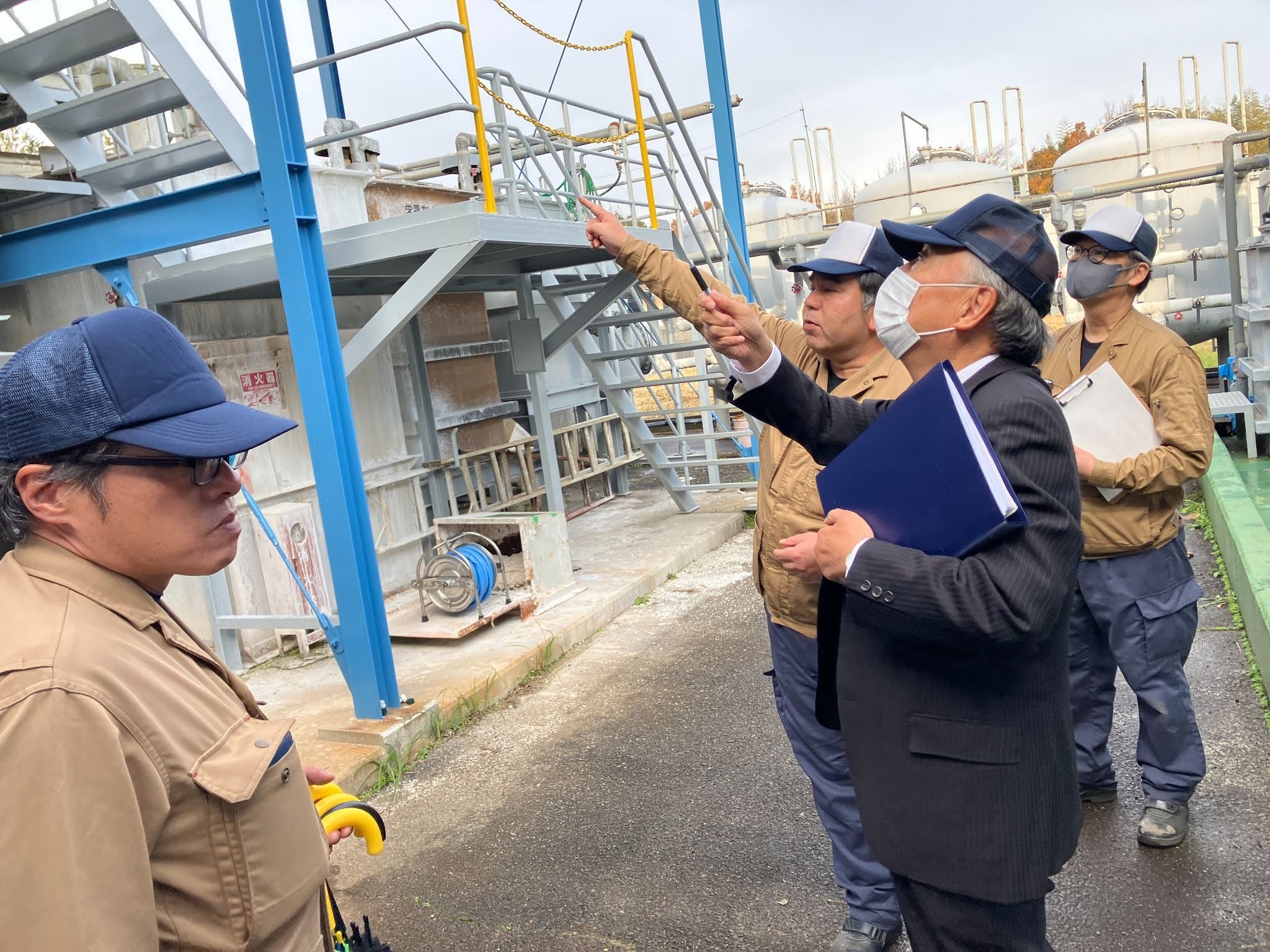
(KOKUYO’s Mie Plant)

(KOKUYO Logitem’s Chubu distribution center)
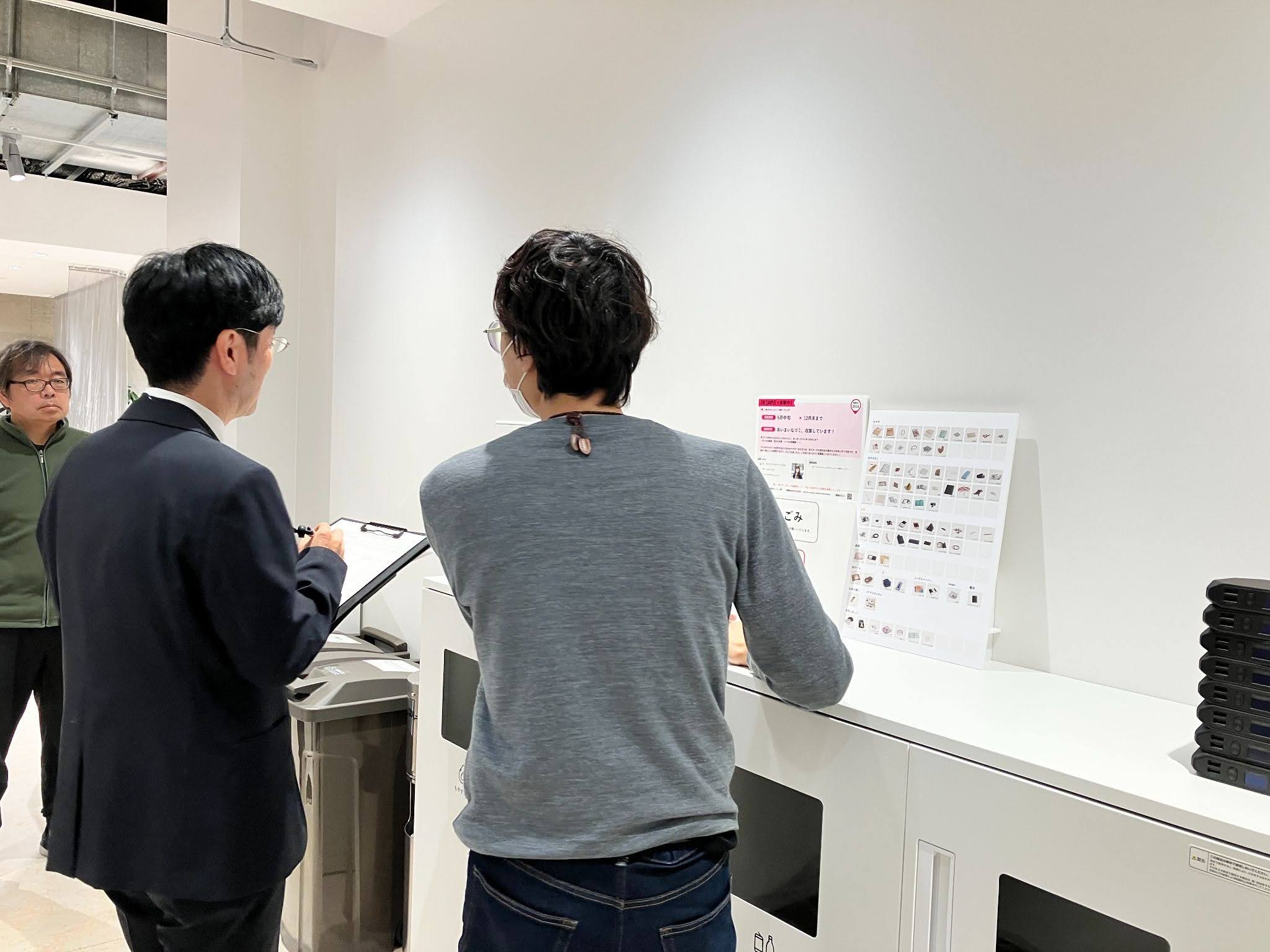
(KOKUYO’s Shinagawa Office)
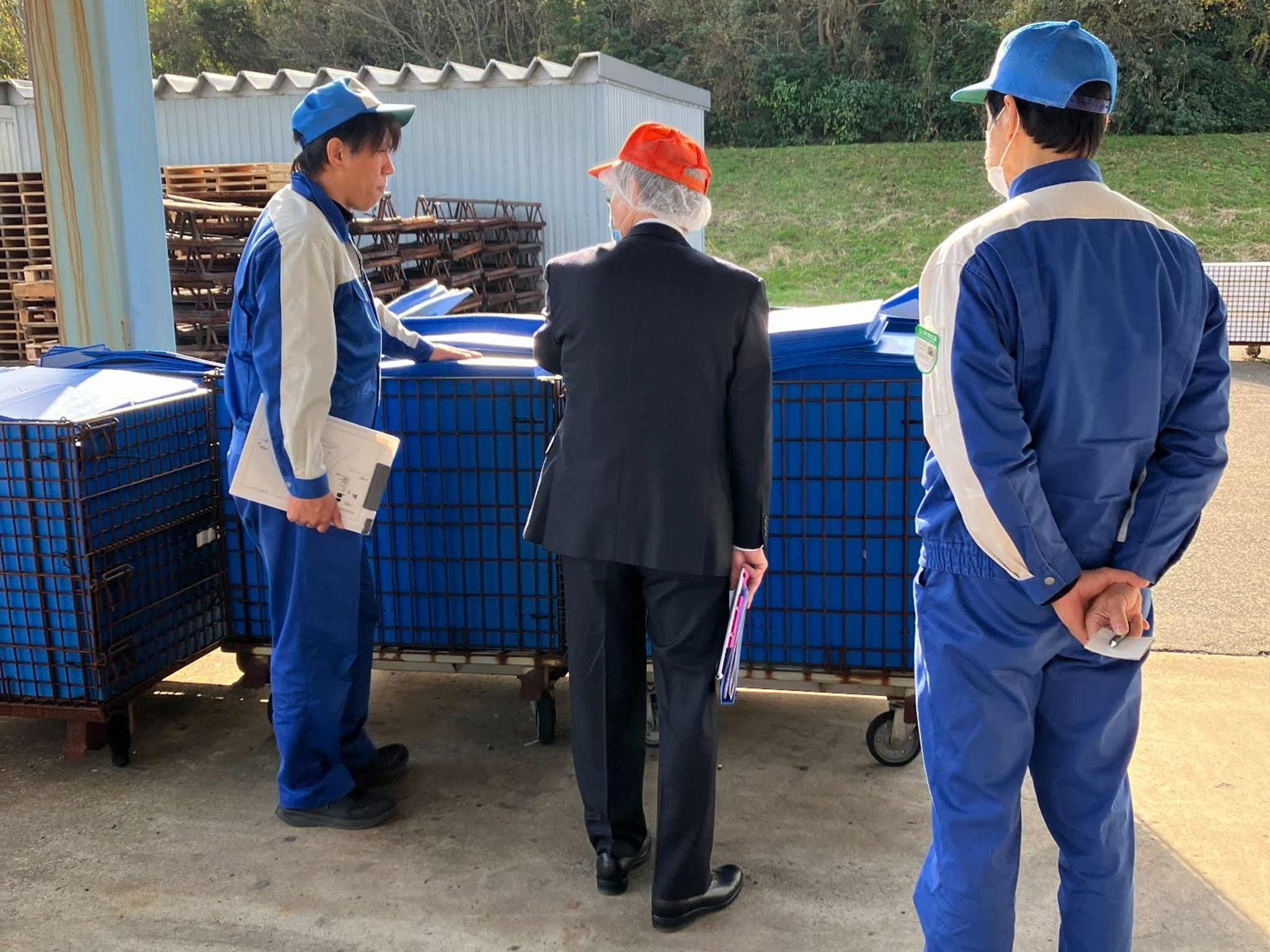
(KOKUYO MVP’s Aoya Plant)
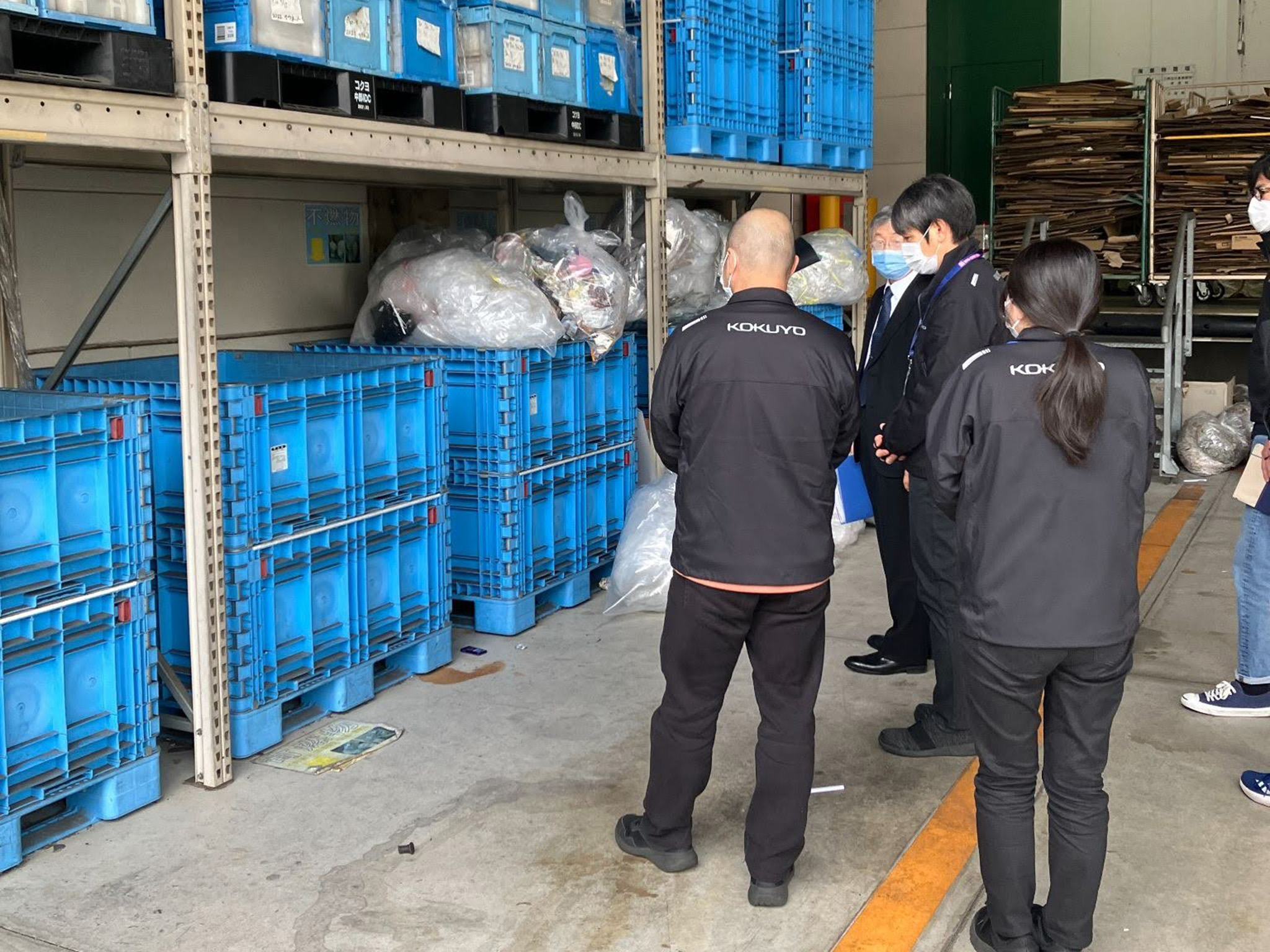
(KOKUYO Supply Logistics’ Chubu distribution center)
Overview of Third-party Reviews of Environmental Performance Data
We underwent a third-party review by Bureau Veritas Japan to receive opinions from an independent standpoint regarding the accuracy, transparency, consistency, validity and completeness of the environmental performance data (environmental burden data and Scope 3) of 28 companies in the KOKUYO Group. In this review, methods for measuring and managing data were subjected to on-site inspections at four of the reviewed business locations, all of which were in Japan (KOKUYO Product Shiga, Origin’s head office, KOKUYO Logitem’s Shin-Chiba distribution center, and KOKUYO Marketing’s Fukuoka office). Bureau Veritas Japan identified six excellent aspects and 16 opportunities for improvement. It also identified 52 issues requiring corrective action and 57 aspects requiring better transparency. During the review period, we rectified the issues requiring corrective action and aspects requiring better transparency. Bureau Veritas Japan noted that each site had sufficient data transparency, with evidential documentation stored correctly. It was also impressed by how the system’s alarm function is used to proactively interview site staff. On the other hand, it noted some instances where data items were transcribed inaccurately and some instances of missing data. Bureau Veritas Japan recommended managerial measures to address these issues. That is, it recommended that we establish standard operating procedures for collecting and aggregating data and establish a system of double checking to prevent input errors. In light of this feedback, we will take steps to make our disclosures more accurate and precise and to improve the data estimation process, both internally and throughout our supply chains.
- Third-party Audit Certification
- ESG databook > E-11 Overview of third-party reviews of environmental performance data
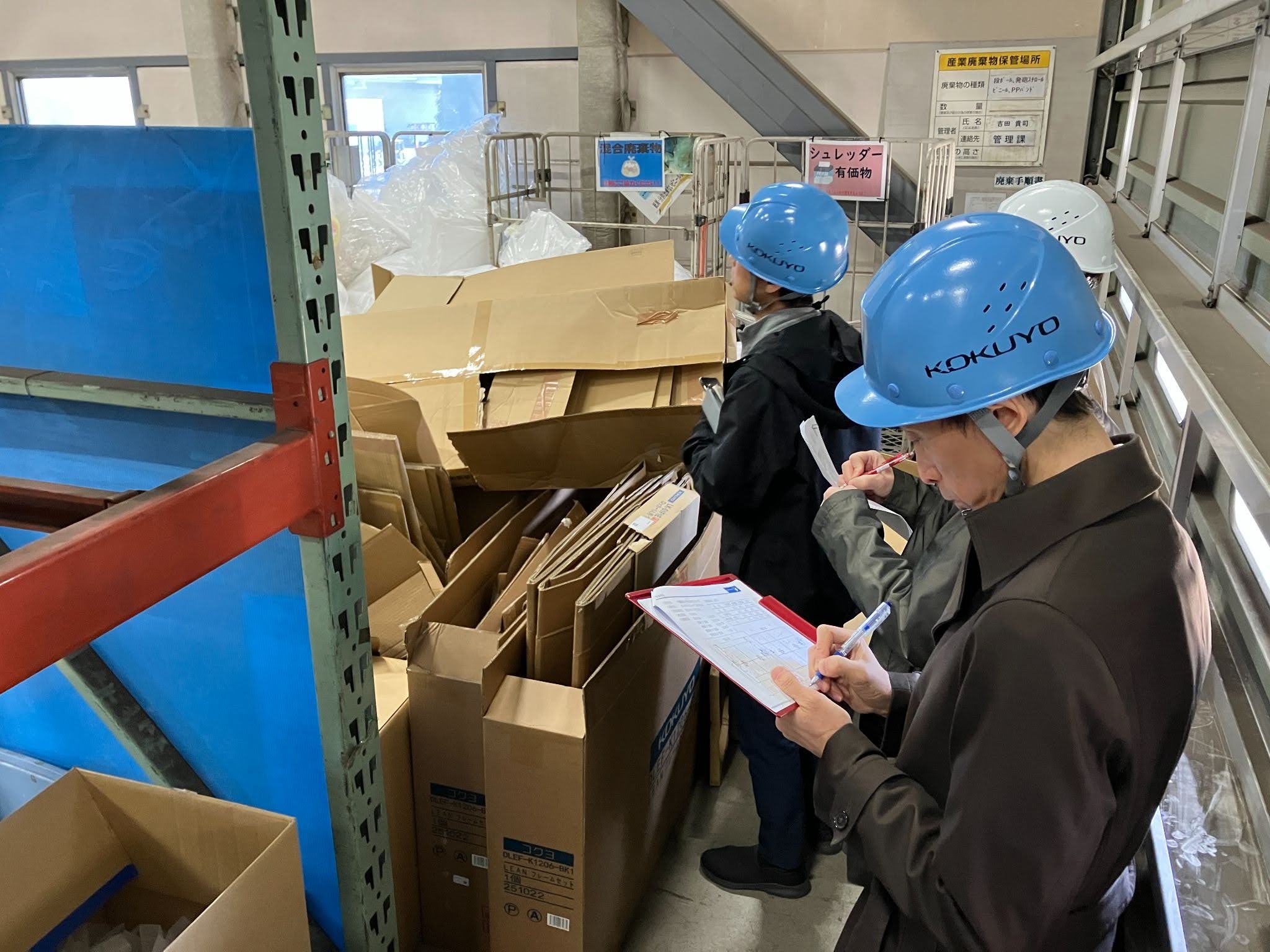
A third-party audit
(KOKUYO Logitem’s Shin-Chiba distribution center)
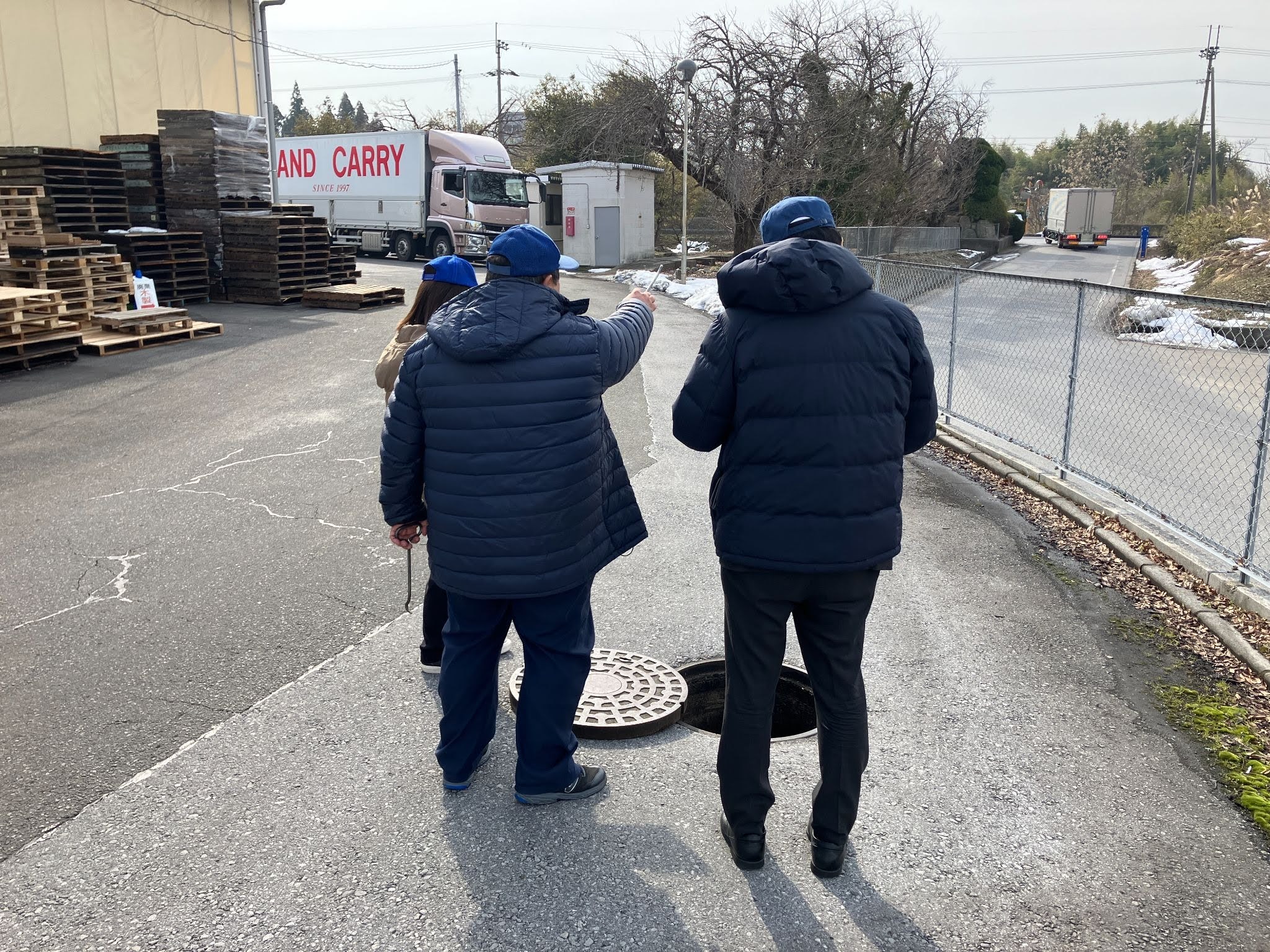
A third-party audit
(KOKUYO Product Shiga Co., Ltd.)
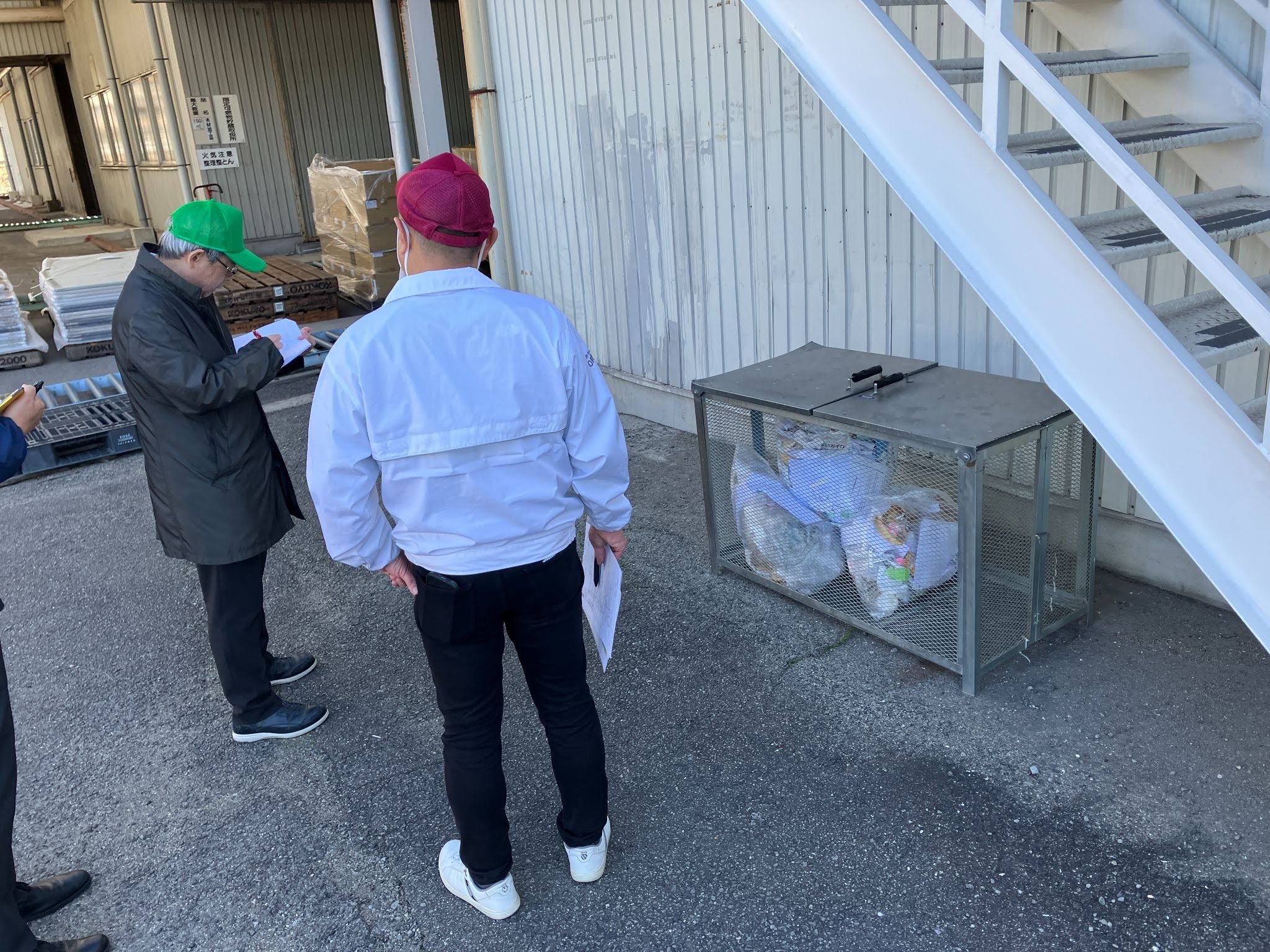
A third-party audit
(Origin’s Headquarters Plant)