KOKUYO's Historical Episode
Cover
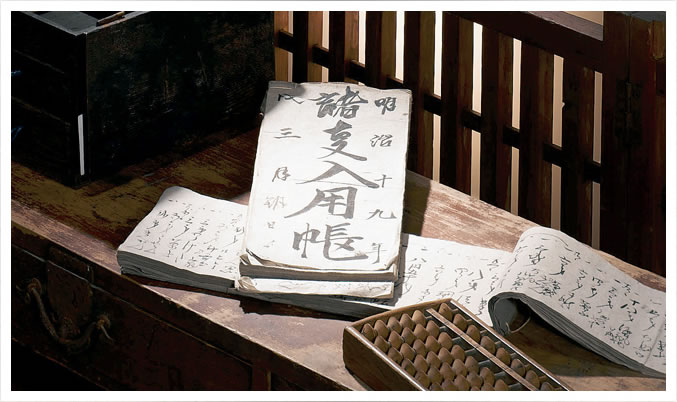
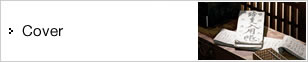
PHOTO : Wachō that was commonly used during the Meiji period.
Creating the Cover that Serves as the Merchant's "Face"
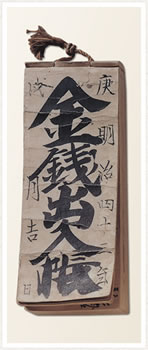
KOKUYO began as a maker of covers for Japanese-style account ledgers, or wachō. Wachō is a collective term for a wide range of record keeping books that were used in modern Japan for various commercial purposes, including those for recording purchased goods, sold goods, receipts, payments, and orders. Daifukuchō, a well-known word meaning "account book," was the master ledger that contained all of these records. For a merchant, all such ledgers were very important. The construction of a wachō was very simple—a stack of washi, or Japanese paper, was topped with a cover and bound together with thread. Because of its simple design, its cover played the vital role of determining the overall impression of the product. However, because the value of the cover only accounted for 5% of the total price of the wachō, manufacturing of such covers, albeit important, was an unprofitable business.
PHOTO : Wachō made in the early days of Kuroda Hyōshi-ten ("Kuroda Cover Shop")
Striving Toward Mass Production and Efficiency
Kuroda Zentarō, however, never ceased to put forth his best creative and innovative efforts despite such unfortunate circumstances. Making covers was an unpretentious job, done by combining many layers of washi to produce the desired thickness, then rubbing them with a teacup to create a glossy surface. The entire process was done by hand, and therefore, there was a limit as to the volume that could be produced. To overcome this issue, Kuroda came up with a method called yoboshi, or "night drying." As the covers needed time to dry after the multiple layers were pasted together, he modified the drying space so that it could be used not only during the day, but also at night. By doing so, he succeeded in shortening the drying time and increasing productivity.